Frequently asked questions
FAQs
We’ve put together this FAQ section to help you quickly find the information you need about our materials, care advice, and how we work. If you can’t find what you’re looking for, just get in touch — we’re here to support your project from start to finish.
Stone
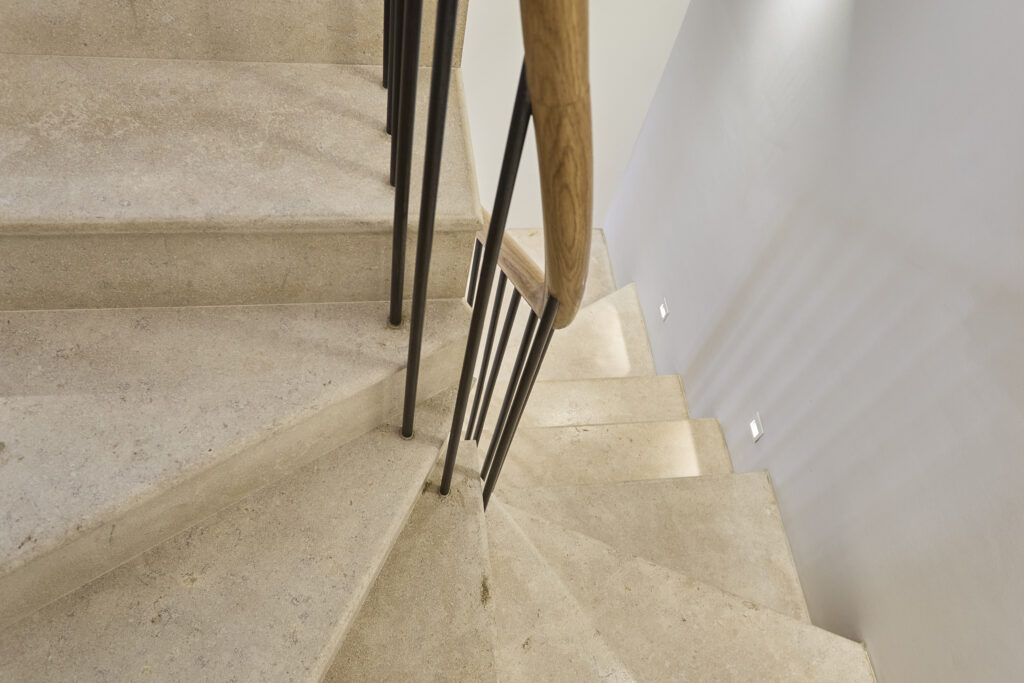
Natural stone tiles are made from stone that is quarried from the earth and processed into tile formats, rather than being man-made from artificial materials. Popular natural stone tiles are made from Limestone, Marble, Slate, Granite, Basalt, Sandstone and Travertine.
Each type of natural stone is defined by their own unique characteristic, whether that be variations in colour, natural fossils or veining, meaning no two tiles the same. As well as this, different stones are better suited to different applications. For example, granite is extremely hardwearing and resistant to acids, making it an ideal material for external applications.
One of our most frequently asked questions is about the advantages and disadvantages of natural stone tiles compared to porcelain tiles. Technically speaking, natural stone tiles require more care during installation, including sealing, as well as needing ongoing maintenance due to their porosity and softness. They are also typically available in smaller formats and are generally more expensive than porcelain tiles. By contrast, natural stone tiles will always be the genuine item, with unique character and will wear to the environment with true character that cannot be replicated by porcelain.
Yes, due to its porous nature, natural stone tiles should be sealed. Choosing the right sealant is essential, as different products vary in the level of protection and longevity they offer.
Modern sealants are designed to protect the stone without altering its natural appearance. These sealants help protect the stone from damage while making the surface easier clean should any damage occur.
It is also important to clean natural stone tiles using a specialist stone cleaner. Unlike generic supermarket cleaners, specialist stone cleaners do not leave behind a residue that attracts dirt, nor do they break down the sealant protection like supermarket cleaners can over time.
Porcelain
Porcelain tiles are not made from stone. They are predominantly made from a combination of fine clays, sand and other minerals such as quartz.
The main advantages of porcelain tiles over natural stone tiles, wooden flooring and terracotta tiles are their durability, low porosity and design versatility. Porcelain tiles are available in a wide range of sizes, colours, designs and surface finishes, making them suitable for a variety of interior and exterior applications. For example, they can be used to create a seamless transition between indoor and outdoor spaces. Porcelain tiles are also typically more affordable than their natural stone equivalents.
The slipperiness of a porcelain tile depends on its slip rating, which is primarily determined by its surface texture. Porcelain tiles are tested for their slip resistance, with the results of this test being categorised according to recognised industry standards, such as PTV (Pendulum Test Value) ratings. As a rule of thumb, polished porcelain tiles are generally more slippery than the honed or anti-slip versions of the same tile, particularly when wet. Choosing the correct slip-rated porcelain tile helps ensure suitability for both interior and exterior applications.
When choosing external porcelain tiles, it is important to ensure they are suitable for the environment in which they are being installed. The main technical considerations include its slip resistance, as external areas may have different requirements compared to internal spaces, and the tile thickness, which will depend on the type of substrate.
There are also aesthetic considerations such as glare reflection, pattern repeats, size options and the range of supporting products, such as step treads and drainage greatest, to name just a few.
Swimming Pools
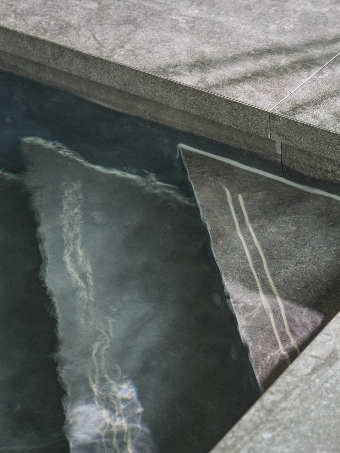
A coping stone is a piece of stone or porcelain used to finish the edge of a swimming pool. Typically, swimming pool coping stones have a rounded or softened edge, which makes it more comfortable when entering or exiting the pool. Coping stones can be made from natural stone or porcelain, depending on the requirements of the swimming pool design.
There is no “best” stone for a coping stone, only the wrong choice for a specific application. Natural stone pool copings should be carefully selected; with the environment they will be used in being considered.
For external swimming pools, the stone must be an externally rated stone and able to withstand the freeze-thaw conditions. For chlorinated pools, the stone needs to resist the acidic environment.
The coping edge should be comfortable for the swimmers entering and exiting the pool, while also providing the correct slip resistance for safety. Porcelain Coping stones are often a good option, offering an ease of maintenance, and more capable with difficult external and chlorinated environments.
Although replacing swimming pool coping stones is relatively straightforward, there are several factors to consider. It is important to ensure that the tanking of the swimming pool is not compromised during the removal of the existing coping stones, and that the new coping stones not only suit the overall aesthetic but also align correctly in thickness with the adjacent terrace.
Maintenance of swimming pool coping stones depends on the material they are made from. Natural stone copings can be affected by algae growth, freeze-thaw damage and acid exposure, particularly in external or chlorinated swimming pool environments. When cleaning natural stone copings, we recommend appropriate stone cleaners, or anti-algae treatments designed for stone surfaces. Porcelain pool copings are typically more resistant to these of issues and usually only require cleaning with specialist porcelain cleaning products. If a natural stone coping becomes damaged or begins to deteriorate, expert advice will be required.
No, not all tiles are suitable to be used around a swimming pool. As well as their aesthetic value, swimming pool tiles should be carefully selected for their slip resistance, chemical resistance and suitability for the environment in which they are installed, such as if they are being installed on external swimming pool. It is also worth choosing tiles that have a corresponding swimming pool range, such as complimentary pool copings and drainage grates.